
The FIFA World Cup is not only a sporting event. It is a temporary global economy.
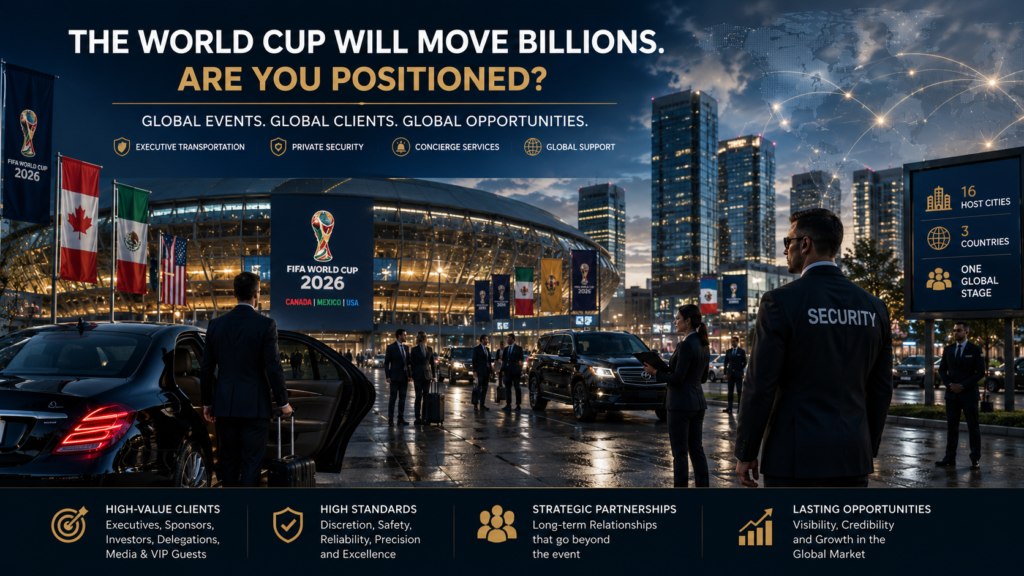
In 2026, the tournament will be hosted across Canada, Mexico, and the United States, with matches scheduled from June 11 to July 19 across 16 host cities. FIFA lists the 2026 edition as the first World Cup hosted by three countries, creating one of the most complex event environments in global sport.
For premium service companies, this matters.
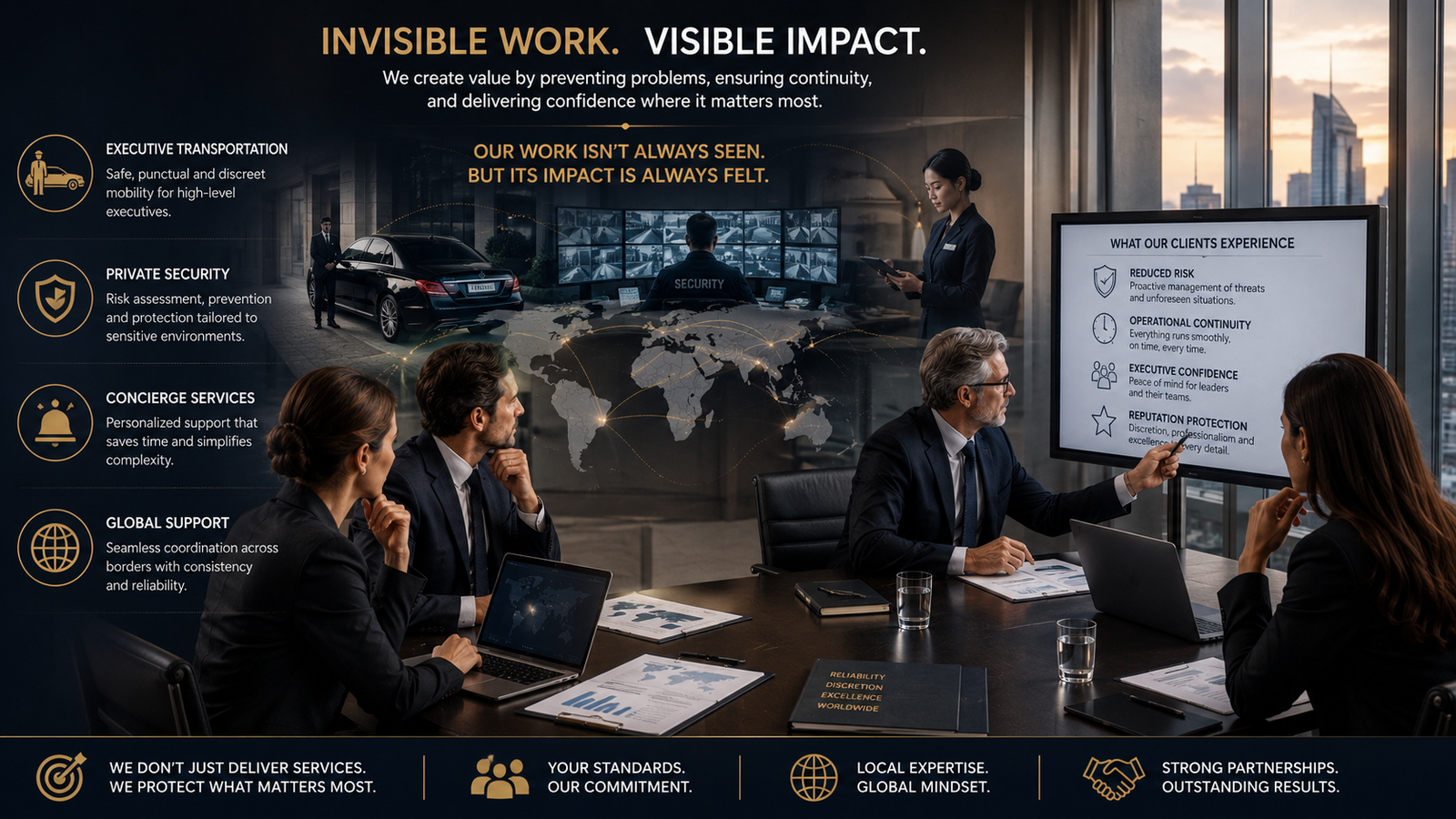
Executive transportation, private security, concierge services, corporate mobility, and international support networks will not merely support fans. They will support executives, sponsors, delegations, investors, media groups, VIP guests, and global corporate clients.
Yet the companies that benefit most will not be those that react once demand becomes obvious.
They will be the ones already positioned before the opportunity becomes visible.
The World Cup as a Strategic Market Shock
Major global events create compressed demand.
For a limited period, cities become international operating hubs. Corporate clients move across borders. Executives attend matches, meetings, brand activations, investment events, hospitality programs, and private gatherings.
This movement creates pressure across the premium service ecosystem.
The World Cup does not only increase the need for hotels, restaurants, and stadium operations. It also creates demand for services that operate quietly behind the scenes:
executive transportation, secure mobility, VIP coordination, private security, concierge support, corporate hospitality, and cross-border logistics.
These services are rarely the public face of the event.
But they are essential to its smooth operation.
For companies in high-trust service sectors, the opportunity is not simply about volume. It is about proximity to global decision-makers.
A company that supports the right client, delegation, sponsor, or corporate group during a major event may gain more than short-term revenue. It may gain visibility, credibility, and access to relationships that continue long after the tournament ends.
That is why the World Cup should not be seen only as a commercial spike.
It should be understood as a strategic window.
How Corporate Clients Actually Choose Service Providers During Global Events
In event-driven environments, corporate clients do not make decisions casually.
The stakes are too high.
A delayed executive transfer, an unprepared security detail, a poorly coordinated VIP arrival, or a failed concierge request can create operational and reputational consequences.
Because of this, companies selecting service providers around the World Cup will evaluate partners through a risk lens.
They will ask:
Can this company operate under pressure?
Does it understand international client expectations?
Can it coordinate discreetly with multiple stakeholders?
Does it have the maturity to handle high-value clients?
Can it protect our reputation as well as deliver the service?
These questions are especially important because the 2026 World Cup will take place across three countries and multiple major cities, making coordination more complex than a single-country event.
In this environment, visibility alone is not enough.
Paid ads, last-minute outreach, and generic service descriptions rarely create trust at the level required for high-value corporate decisions.
Corporate clients tend to rely on providers that already appear credible, stable, and aligned with premium expectations.
That means positioning becomes part of the selection process.
The companies that look prepared, mature, and strategically relevant before the tournament begins will have a stronger chance of being considered when demand accelerates.
Why Many Capable Companies Will Miss the Opportunity
Many strong local service companies will look at the World Cup and see operational demand.
They will prepare vehicles, teams, schedules, security resources, and service capacity.
Those preparations matter.
But they are not enough.
The deeper question is whether the market already understands the company’s relevance before the opportunity arrives.
This is where many capable companies fail.
They are operationally ready, but strategically invisible.
They may have excellent chauffeurs, experienced security professionals, strong local knowledge, and reliable service standards. Yet international clients may not know how to evaluate them.
If the company appears only as a local provider, it may be excluded from higher-value conversations.
If its message sounds generic, it may be compared on price.
If its reputation is not visible beyond local networks, it may never reach the shortlist.
The World Cup will create demand, but demand does not automatically create access.
Access depends on trust.
And trust, in premium B2B service markets, is built before the first request arrives.
Three Strategic Signals That Position Companies for World Cup Opportunities
1. International Readiness
The first signal is international readiness.
This does not mean pretending to be larger than the company is. It means communicating that the organization understands the standards of international corporate clients.
For executive transportation companies, this may include language around corporate mobility, VIP movement, airport coordination, discretion, and multi-city planning.
For private security companies, it may involve clear positioning around risk management, protective intelligence, event security, and executive safety.
For concierge and support services, it may mean framing the company as a partner for high-value international visitors who require precision, speed, and discretion.
International readiness is not only operational.
It is perceptual.
A company must look like it belongs in conversations involving global clients, not only local demand.
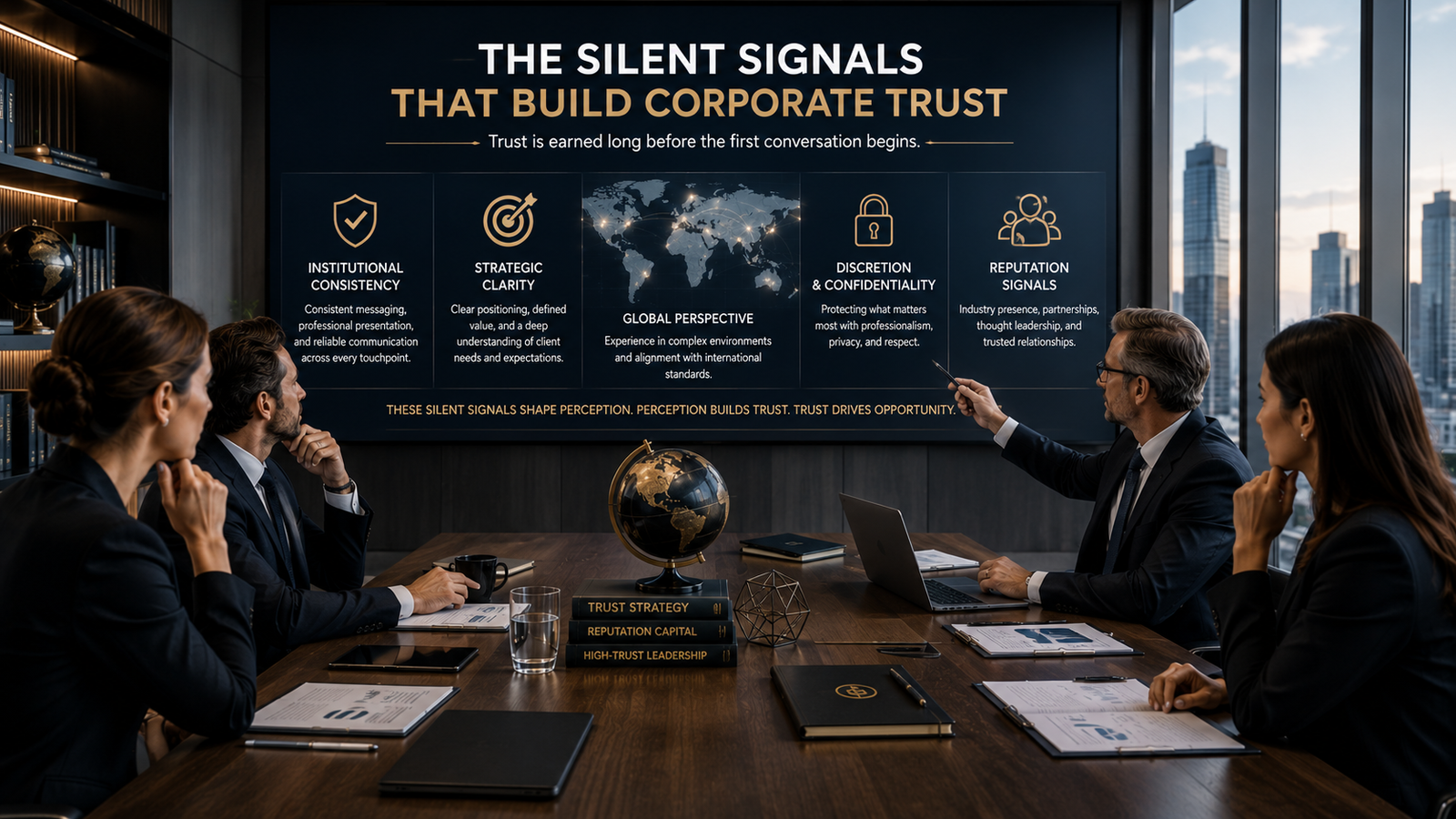
2. Institutional Credibility
The second signal is institutional credibility.
During major events, clients avoid uncertainty. They prefer partners that appear structured, stable, and professionally managed.
Institutional credibility can be communicated through:
clear positioning, professional documentation, consistent service language, visible leadership perspective, strong corporate presentation, and evidence of experience with high-trust clients.
This matters because global event opportunities often involve multiple stakeholders.
A sponsor may need to coordinate with executives, guests, agencies, hotels, stadium teams, transport providers, and security partners.
A company that appears informal or unclear may create hesitation.
A company that appears institutionally mature reduces perceived risk.
In premium markets, reduced risk is a competitive advantage.
3. Strategic Visibility Before Demand Peaks
The third signal is visibility before the market becomes crowded.
When the World Cup is already underway, attention will be expensive and competition will be intense.
By then, many decisions will already have been made.
The real positioning opportunity exists earlier.
Companies should be visible in the contexts where decision-makers are already thinking about the tournament:
corporate travel, executive mobility, event security, VIP hospitality, concierge support, global service networks, and international business operations.
This visibility does not need to be loud.
It should be precise.
The goal is not to advertise heavily to everyone. The goal is to become recognizable to the right audience before they need to choose.
When a corporate client eventually searches for a partner, the company should not feel unfamiliar.
It should feel already credible.
Conclusion
The World Cup will move billions through cities, industries, and service ecosystems.
But the most valuable opportunities will not be visible to every company.
They will exist inside corporate networks, private planning cycles, hospitality programs, executive movements, and high-trust operational environments.
For premium service companies, the question is not only whether they can serve the demand.
The question is whether they are positioned to be trusted when the demand arrives.
Operational readiness matters.
But in global event environments, credibility determines access.
Companies that build international readiness, institutional credibility, and strategic visibility before the tournament begins will be better placed to capture opportunities that others may never see.
The World Cup will create movement.
Positioning will determine who moves with it.
Companies operating in high-trust international markets often discover that growth depends on positioning as much as operations.
If your company is navigating this challenge, applying for a strategic diagnosis can be a valuable first step.