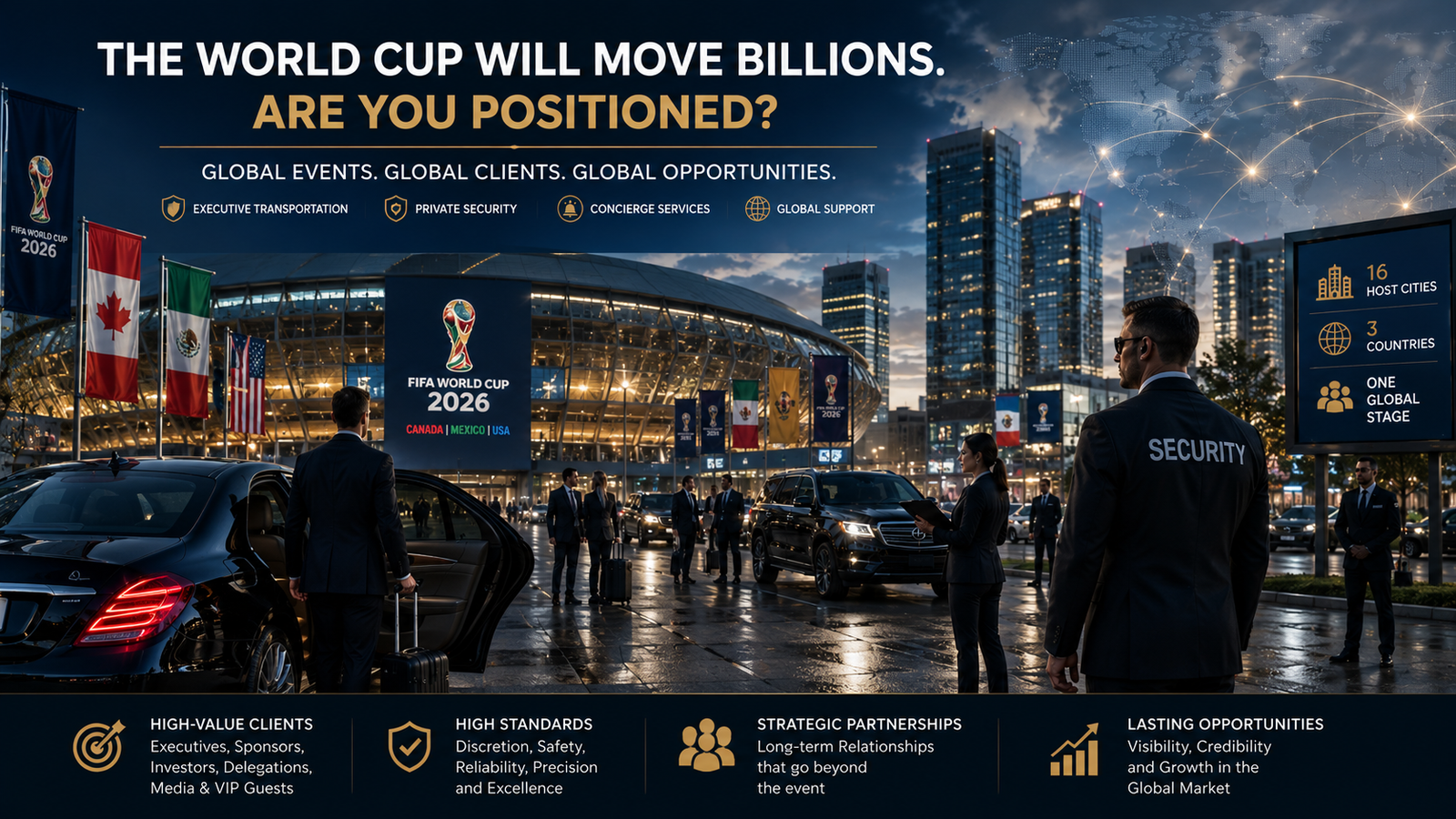


Global events are often measured by their visible impact: media coverage, economic activity, and large-scale infrastructure investments.
However, the most significant opportunities created by these events are often the least visible.
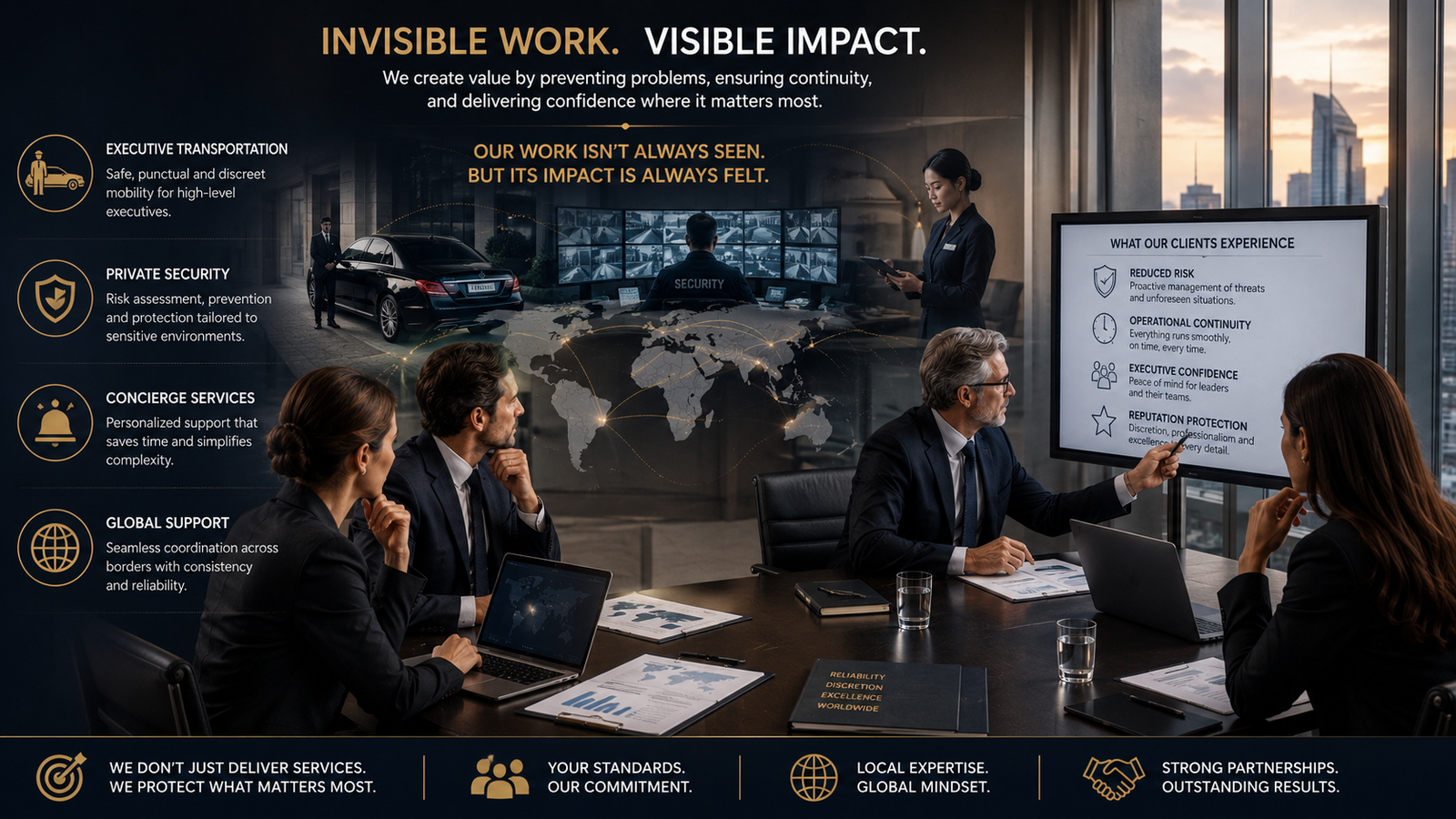
Behind every international summit, sporting event, or global conference lies a complex network of services operating quietly in the background. Executive transportation, private security, concierge coordination, and corporate support systems all play critical roles — yet rarely receive direct attention.
For companies operating in premium service industries, this creates a unique dynamic.
The opportunity exists, but it is not openly advertised.
Understanding how global events generate these invisible business opportunities reveals a crucial strategic truth: participation is not driven by visibility during the event, but by positioning long before it begins.
The Hidden Infrastructure Behind Global Events
Global events function as temporary ecosystems.
When a city hosts an international conference or a large-scale gathering, it becomes a convergence point for:
- corporate delegations
- government officials
- high-net-worth individuals
- media organizations
- logistics and operational teams.
This concentration of activity creates demand for services that ensure everything runs smoothly behind the scenes.
These services include:
- executive mobility coordination
- discreet security operations
- concierge and hospitality management
- real-time logistical support.
Yet unlike visible vendors such as sponsors or exhibitors, these service providers operate within a hidden layer of infrastructure.
Their role is not to be seen.
Their role is to ensure that nothing goes wrong.
This invisibility creates a paradox.
The more critical the service, the less visible it becomes.
And as a result, the opportunity is rarely accessible through traditional channels.
How Companies Actually Access These Opportunities
From the outside, global events may appear to generate open demand.
In reality, access to these opportunities is highly selective.
Event organizers, corporate clients, and institutional stakeholders do not typically search for unknown providers during high-pressure environments.
Instead, they rely on:
- established networks
- trusted partners
- previously validated providers
- recommendations within professional circles.
This approach is driven by risk management.
Global events involve compressed timelines, high visibility, and significant reputational exposure. Selecting an unproven partner introduces uncertainty — something decision-makers actively avoid.
As a result, the selection process often happens before the event becomes visible to the broader market.
Companies that are already recognized within the ecosystem are integrated into planning phases.
Others may only become aware of the opportunity once it is effectively closed.
This explains why many capable service providers remain outside these environments.
The barrier is not operational readiness.
It is strategic visibility within the right networks.
Why Most Companies Overlook Invisible Opportunities
Many organizations focus their growth strategies on visible demand.
They monitor:
- public tenders
- marketing channels
- inbound inquiries
- advertising performance.
While these channels are relevant, they rarely capture the full scope of opportunity within high-trust service industries.
Invisible opportunities operate differently.
They are shaped by:
- relationships built over time
- reputation within specific ecosystems
- consistent presence in relevant contexts
- alignment with the expectations of decision-makers.
Companies often overlook these dynamics for several reasons.
First, invisible opportunities do not follow predictable patterns.
They are not announced publicly and cannot be accessed through standard acquisition strategies.
Second, many companies underestimate the role of perception.
They assume that being capable is sufficient to be considered.
In reality, decision-makers prioritize who they already trust or recognize.
Third, organizations may treat positioning as secondary to operations.
Without clear positioning, even strong companies remain outside the networks where these opportunities emerge.
The result is a strategic blind spot.
Opportunities exist, but they remain unseen.
Three Strategic Signals That Unlock Invisible Opportunities
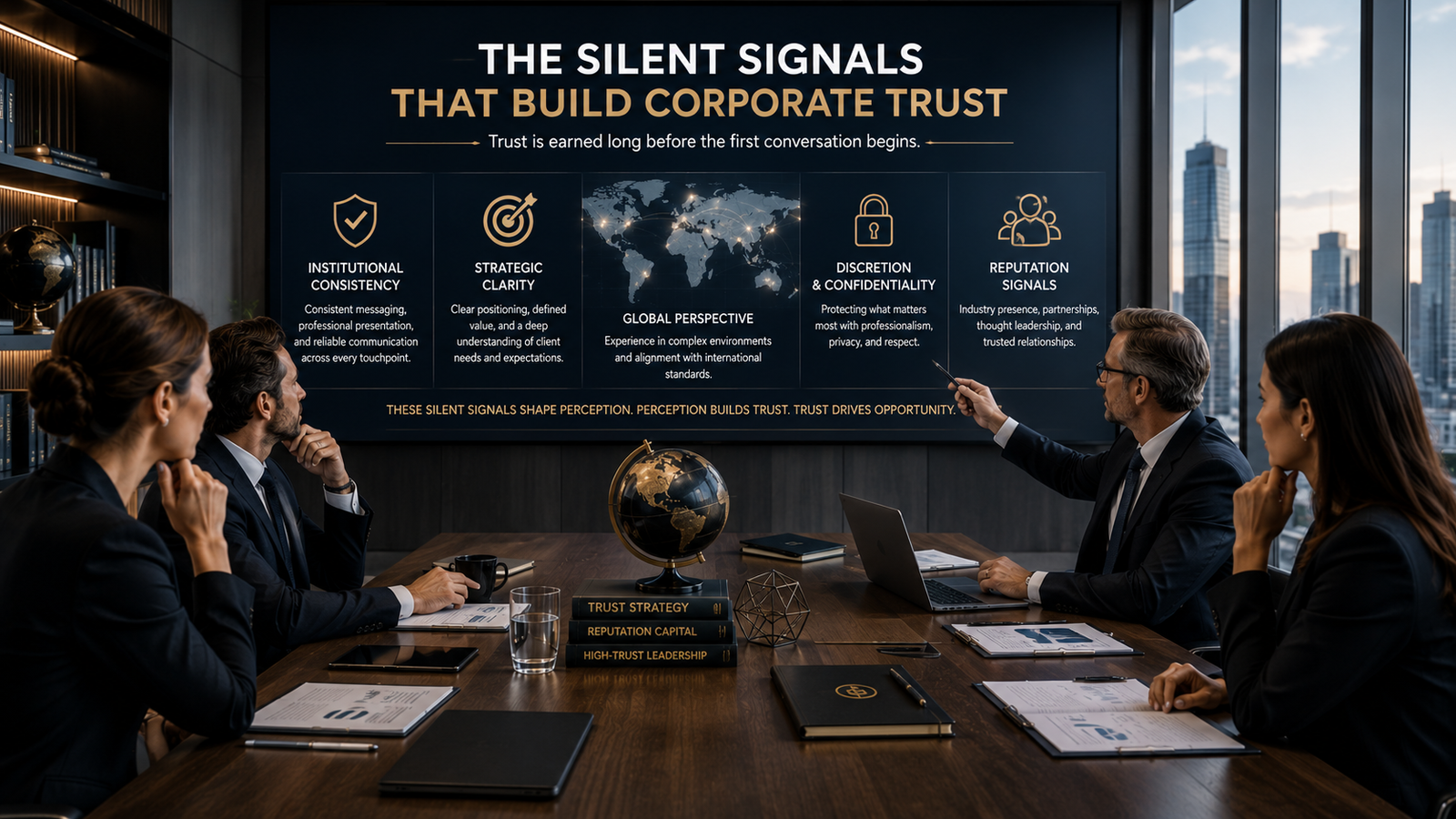
While invisible opportunities may seem inaccessible, companies that consistently participate in global event ecosystems tend to demonstrate a set of identifiable signals.
These signals position them within the field of consideration before opportunities arise.
1. Embedded Presence in Relevant Networks
Companies that operate within global ecosystems rarely act in isolation.
They are connected to:
- international service networks
- corporate travel infrastructures
- security and logistics partnerships
- cross-border operational alliances.
These connections create pathways to opportunity.
When an event requires reliable partners, decision-makers often turn to these networks first.
2. Recognizable Industry Positioning
Organizations that are consistently perceived as authoritative within their sector are more likely to be considered for complex environments.
This positioning is not built during the event.
It is developed over time through:
- clear articulation of the company’s role
- visible expertise within the industry
- alignment with global service standards.
When a company is easily recognizable, it becomes easier for decision-makers to include it in their mental shortlist.
3. Reputation for Reliability in High-Stakes Environments
Global events amplify risk.
Delays, failures, or inconsistencies can have immediate consequences.
Because of this, decision-makers prioritize providers with a reputation for reliability under pressure.
This reputation is often built through:
- previous experience in complex operations
- consistent performance across different environments
- endorsements within professional networks.
Over time, this creates a form of trust that extends beyond individual projects.
It becomes a predictive signal of performance.
Conclusion
Global events generate far more than visible economic activity.
They create a network of invisible opportunities for companies operating in high-trust service industries.
However, these opportunities do not function like traditional markets.
They are not openly accessible, widely advertised, or driven by immediate demand.
Instead, they are shaped by positioning, reputation, and presence within specific ecosystems.
Companies that recognize this dynamic approach growth differently.
They understand that access to these opportunities depends on being visible before visibility matters.
In high-stakes environments where trust defines participation, the companies that succeed are not those that react to events.
They are the ones that are already positioned when the opportunity emerges.
Companies operating in high-trust international markets often discover that growth depends on positioning as much as operations.
If your company is navigating this challenge, applying for a strategic diagnosis can be a valuable first step.